Secure Merchant and Payment Operations
Built and hardened backend logic, APIs, partner integrations, validation, and operational tooling for merchant and payment workflows where correctness, auditability, and production stability were non-negotiable.
Product Context
Nuvei operates fintech and payment technology systems that support merchant services, payment processing, partner integrations, transaction data, reporting, and internal operational tools. Control-panel surfaces such as live operations, risk investigation / case management, and settlement control reflect the real operational loop: process accurately, investigate exceptions, and reconcile outcomes. Engineering work lived inside that loop—where small defects become financial and trust problems.
Problem
Payment platforms cannot treat “mostly correct” as success. Transaction workflows must remain consistent under load and partial failure; partner and banking integrations fail in messy ways; reporting and reconciliation must be auditable; and operations teams need enough signal to diagnose issues without guessing. The engineering problem is to make correctness, failure handling, and operational visibility first-class properties of the system—not afterthoughts added when something breaks.
Winston's Role
As a Software Developer, I focused on application development, backend logic, APIs, database-driven features, integration support, and maintenance of payment-related systems. I improved validation, error handling, logging, and troubleshooting; supported partner and internal integrations; and collaborated with QA, product, support, and operations to investigate issues and ship stable releases.
Constraints
- —High expectations for accuracy and availability around transaction and merchant workflows
- —External partner and payment-related services with uneven reliability and ambiguous failure modes
- —Financial and operational data requiring strict validation, reconciliation visibility, and audit-friendly trails
- —Production incidents that demanded fast, evidence-based diagnosis across application and data layers
- —Shared ownership with QA, support, and operations—changes had to be operable, not only deployable
Technical Foundation
- ▸Backend logic and APIs for payment processing, merchant workflows, account data, reporting, and service communication
- ▸Database-driven features supporting reporting, reconciliation, account activity, and operational visibility
- ▸Partner and internal integration paths with explicit error handling and troubleshooting support
- ▸Validation, logging, and defect remediation practices aimed at production reliability
- ▸Operational tooling mindset: systems must be diagnosable by engineering and adjacent teams under pressure
Challenges
- ◆Preserving transaction and merchant workflow correctness when dependencies fail mid-flight
- ◆Containing partner outages and bad responses so they do not corrupt downstream reporting or operational state
- ◆Making validation consistent at every entry point—not only on the primary happy path
- ◆Giving operations and support enough logging and structure to investigate risk and settlement issues quickly
- ◆Refactoring and hardening edge-case behavior without introducing regressions in financially sensitive paths
Product
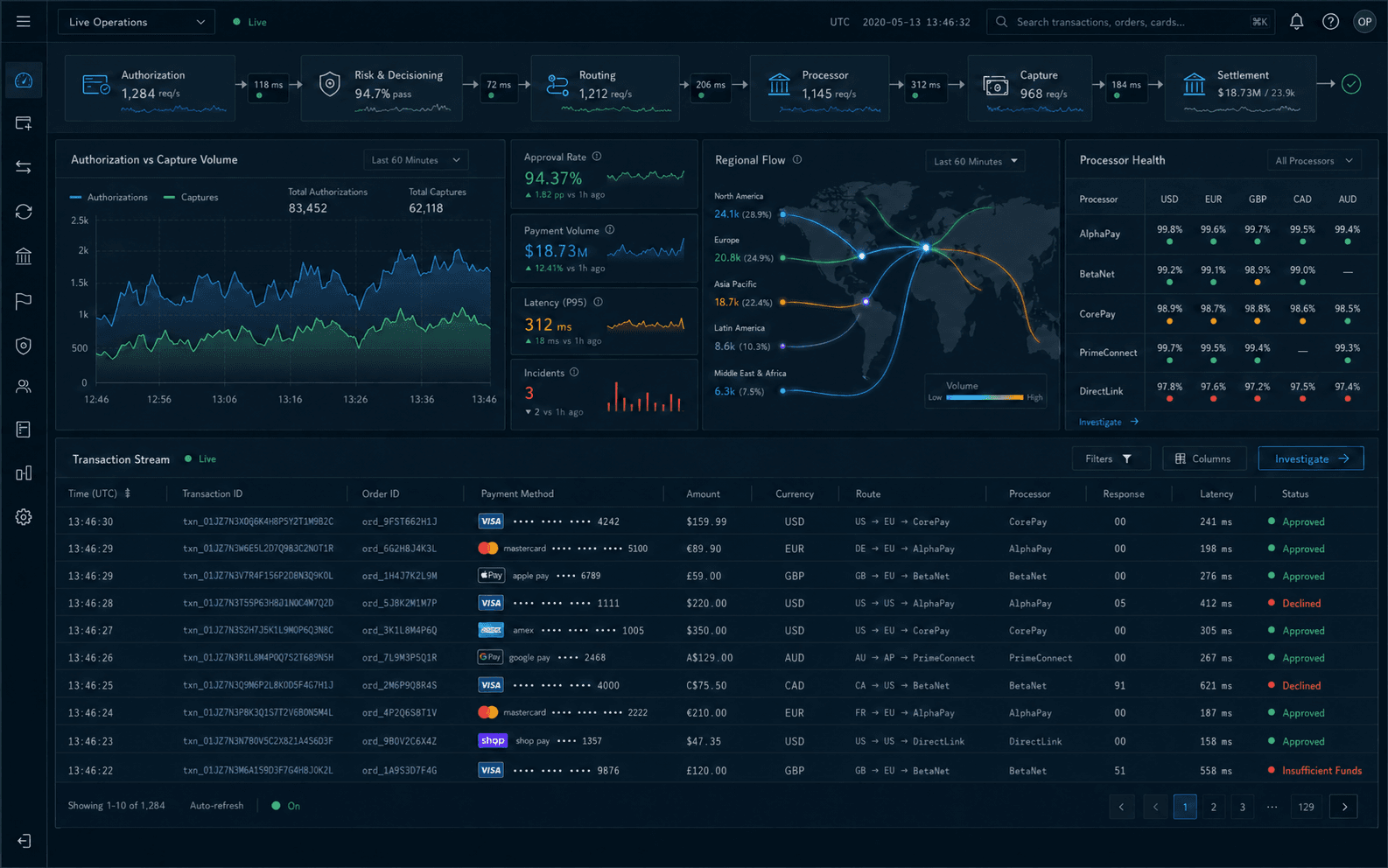
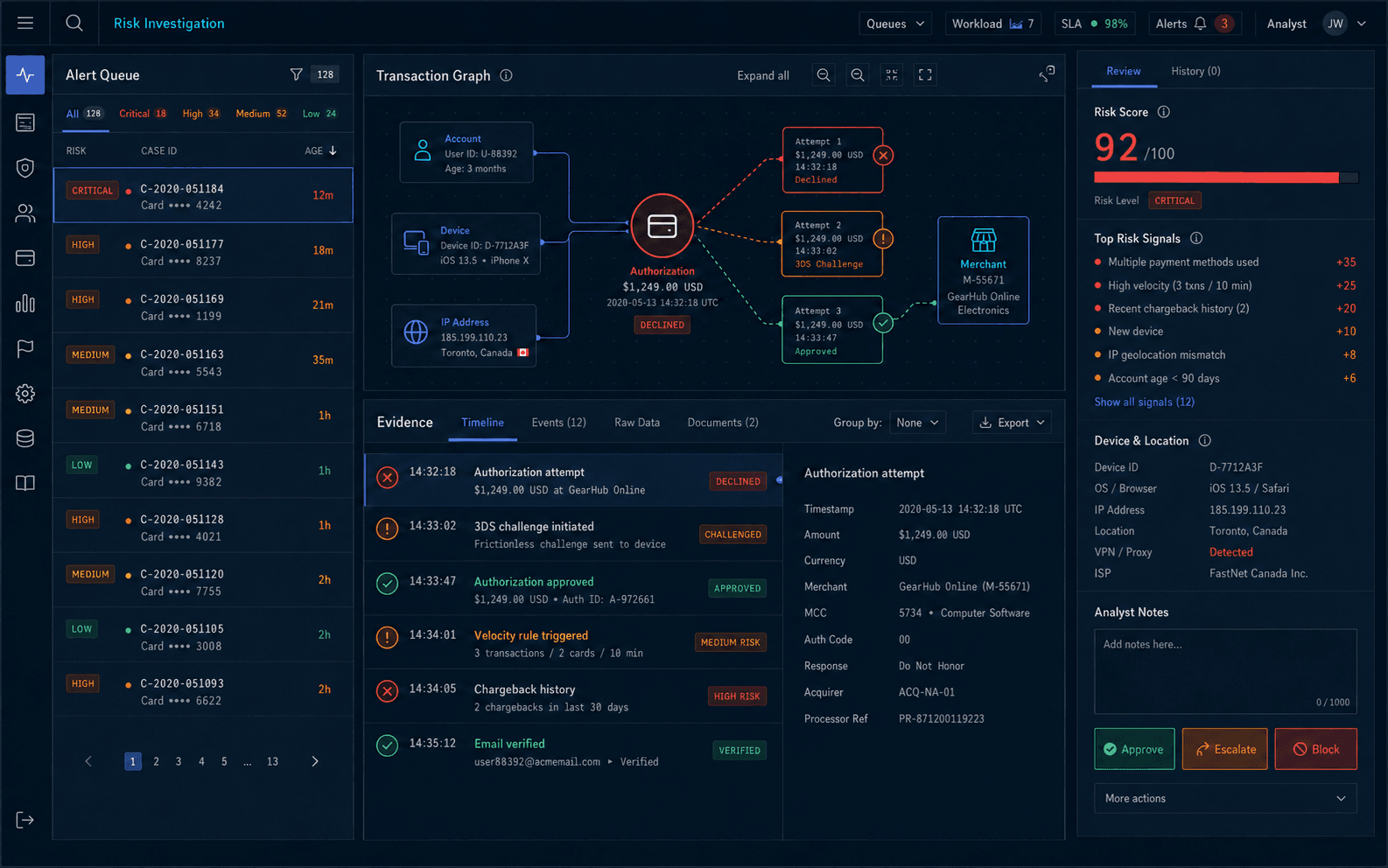
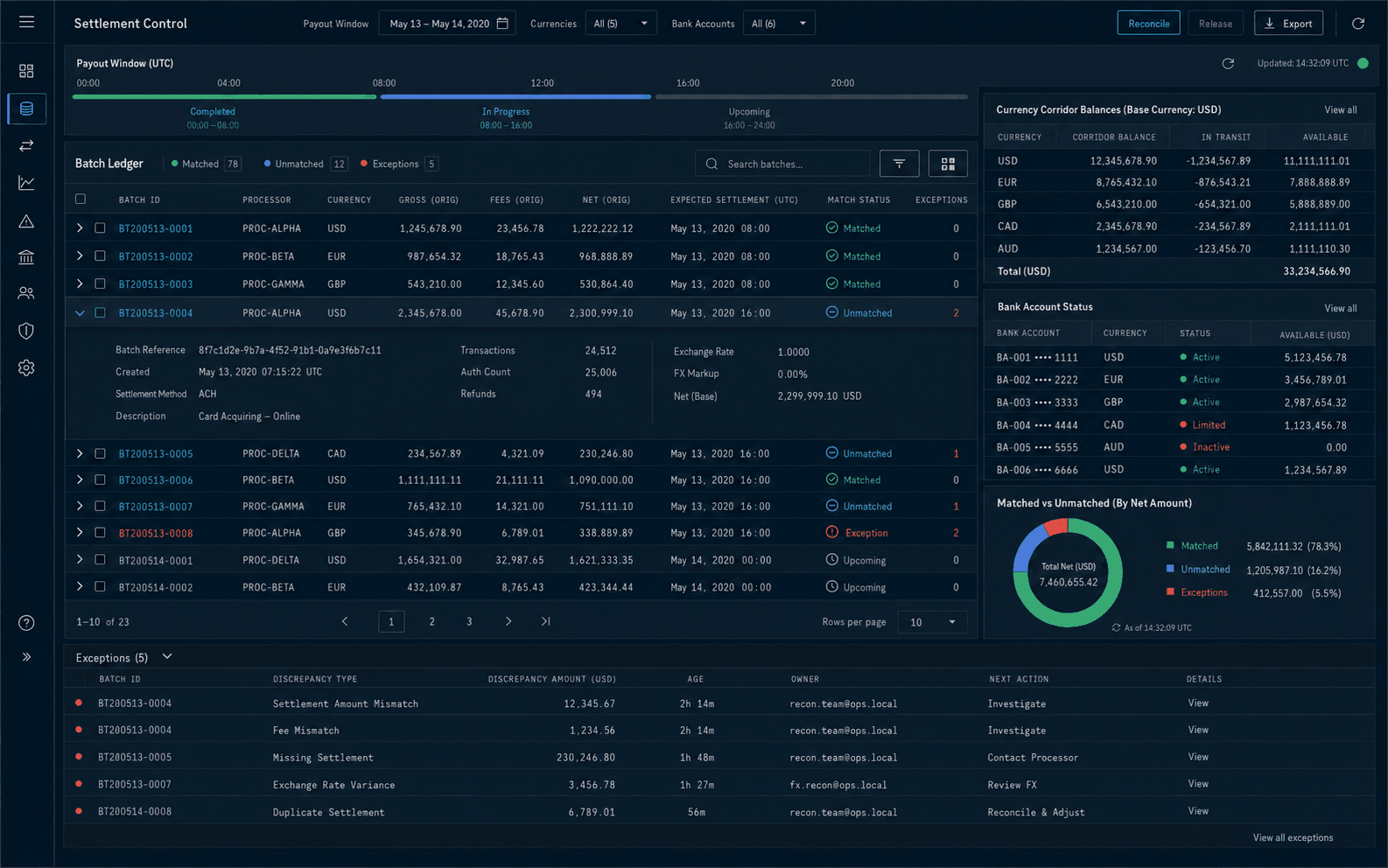
Live Operations · 1 / 3
Product UI shown for context. Details have been generalized to respect confidentiality.
Key Engineering Contributions
- →Developed and maintained software features supporting payment processing, merchant workflows, partner integrations, and internal fintech operations
- →Built backend logic and APIs for transaction-related workflows, account data, reporting, and service communication
- →Improved data validation, error handling, logging, and troubleshooting for payment and merchant-service workflows
- →Worked with database-driven systems to support reporting, reconciliation, account activity, and operational visibility
- →Supported integration work involving external partners, payment-related services, and internal business systems
- →Improved application reliability by fixing defects, refactoring code, and strengthening behavior around edge cases
- →Collaborated with QA, product, support, and operations to investigate issues and deliver stable releases
Reliability, Security & Maintainability
Reliability
Reliability meant idempotent thinking, careful error handling, and failure isolation around transaction and integration paths. Logging and troubleshooting improvements existed to shorten incident cycles—so teams could see what happened, not merely that something failed.
Security
Financial and merchant data handling required disciplined access control, careful API boundaries, and audit-aware practices. Authentication and authorization consistency across integration edges was treated as part of correctness, not a separate concern.
Maintainability
Integration and shared validation/logging utilities were structured to limit duplication and isolate partner-specific volatility. Refactors targeted fragile edge cases so future changes were less likely to reintroduce silent financial defects.
Outcome
Strengthened backend and operational foundations for Nuvei’s merchant and payment workflows—clearer validation, better diagnosability, and more resilient integration behavior. Proprietary payment internals have been generalized to respect confidentiality.
Lessons
- ◆In payments, the failure path is the product: every integration must assume partner outages and partial responses
- ◆Observability is a reliability feature—logging and structured diagnosis repay their cost on the first non-trivial incident
- ◆Financial accuracy requires the same validation discipline at every entry point, including secondary operational tools
- ◆Staff-level ownership includes making systems operable for QA, support, and operations—not only “green” in staging