Connected Design and Commerce Workflows
Owned and delivered application features, backend services, APIs, and cloud integrations that connect product configuration, planning, quoting, and ordering into reliable design-to-commerce workflows for manufacturers, retailers, and designers.
Product Context
Cyncly builds SaaS platforms for the spaces-for-living industry. Design Flex and related tools help designers, retailers, manufacturers, and business teams manage product configuration, space planning, quoting, ordering, and connected digital workflows. The product surface spans project boards that track deal stages, design workspaces where configuration options and layouts are refined, and downstream quote, order, and installation handoffs. Engineering work sat at the intersection of complex product content, business rules, customer workflows, and operational systems.
Design Flex and 3CAD product context
Problem
Design-to-commerce is not a single feature—it is a chain of decisions. Configuration rules, pricing logic, quote generation, order handoffs, and partner catalog or ERP integrations must stay consistent as data moves across services and teams. When any link is brittle, users feel friction, support load rises, and operational systems receive incomplete or incorrect payloads. The engineering problem is to make that chain clear at the API and data boundaries, resilient under partner variability, and maintainable as the product continues to evolve.
Winston's Role
As a Senior Software Engineer, I worked across the application layer, backend services, APIs, integrations, and cloud-based systems. I focused on features where usability, performance, data accuracy, and long-term maintainability mattered most—owning delivery with product, design, QA, and DevOps, strengthening production readiness through validation and logging, and contributing to technical direction through code reviews, architecture discussions, and mentoring.
Constraints
- —Domain logic that spans configuration, pricing, quoting, and ordering—with rules that must stay consistent across UI and services
- —Third-party manufacturer, catalog, and ERP integrations with uneven API quality, latency, and failure modes
- —Multi-tenant SaaS expectations for data isolation, performance under variable load, and safe release practices
- —Legacy platform areas that needed refactoring without blocking ongoing product delivery
- —Cross-functional delivery cadence requiring stable, production-ready features rather than isolated ticket completion
Technical Foundation
- ▸Application features and backend services supporting planning, configuration, quoting, ordering, and workflow automation
- ▸API and service boundaries that connect product data, customer workflows, and internal platform capabilities
- ▸Integration flows bridging design tools with commerce, catalog, and operational systems
- ▸Cloud-hosted delivery with attention to scalability, validation, and operational visibility
- ▸Shared engineering practices: testing, debugging, production support, code review, and maintainable service design
Challenges
- ◆Keeping configuration-to-quote-to-order behavior coherent when domain rules live across multiple surfaces and services
- ◆Absorbing partner and ERP variability without leaking third-party instability into core product workflows
- ◆Preserving multi-tenant isolation and data accuracy while workflows grow more connected
- ◆Reducing technical debt in legacy areas while still shipping customer-facing capabilities at a sustainable pace
- ◆Coordinating product, design, QA, and DevOps so reliability work (validation, logging, edge cases) ships with features—not after incidents
Product
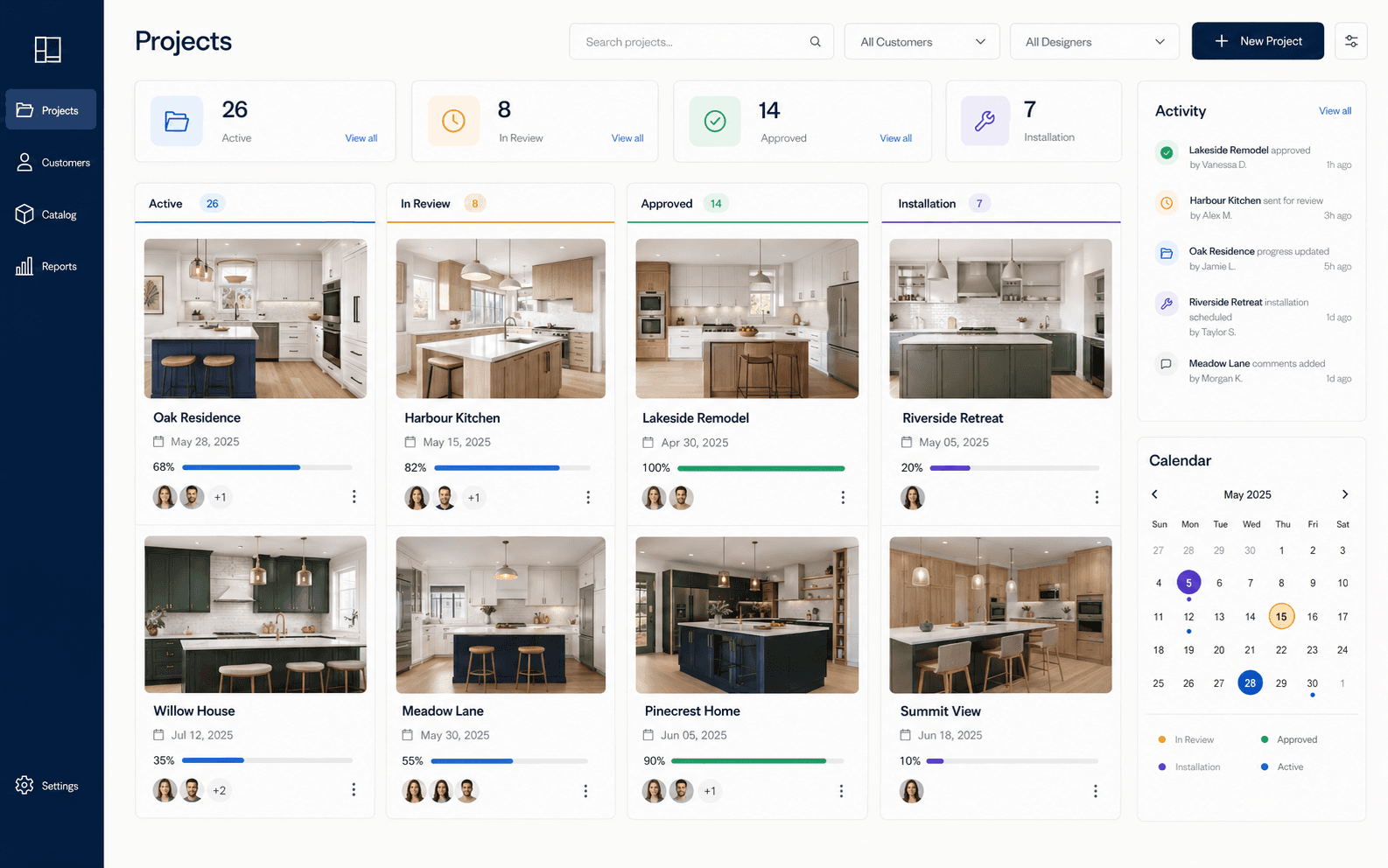
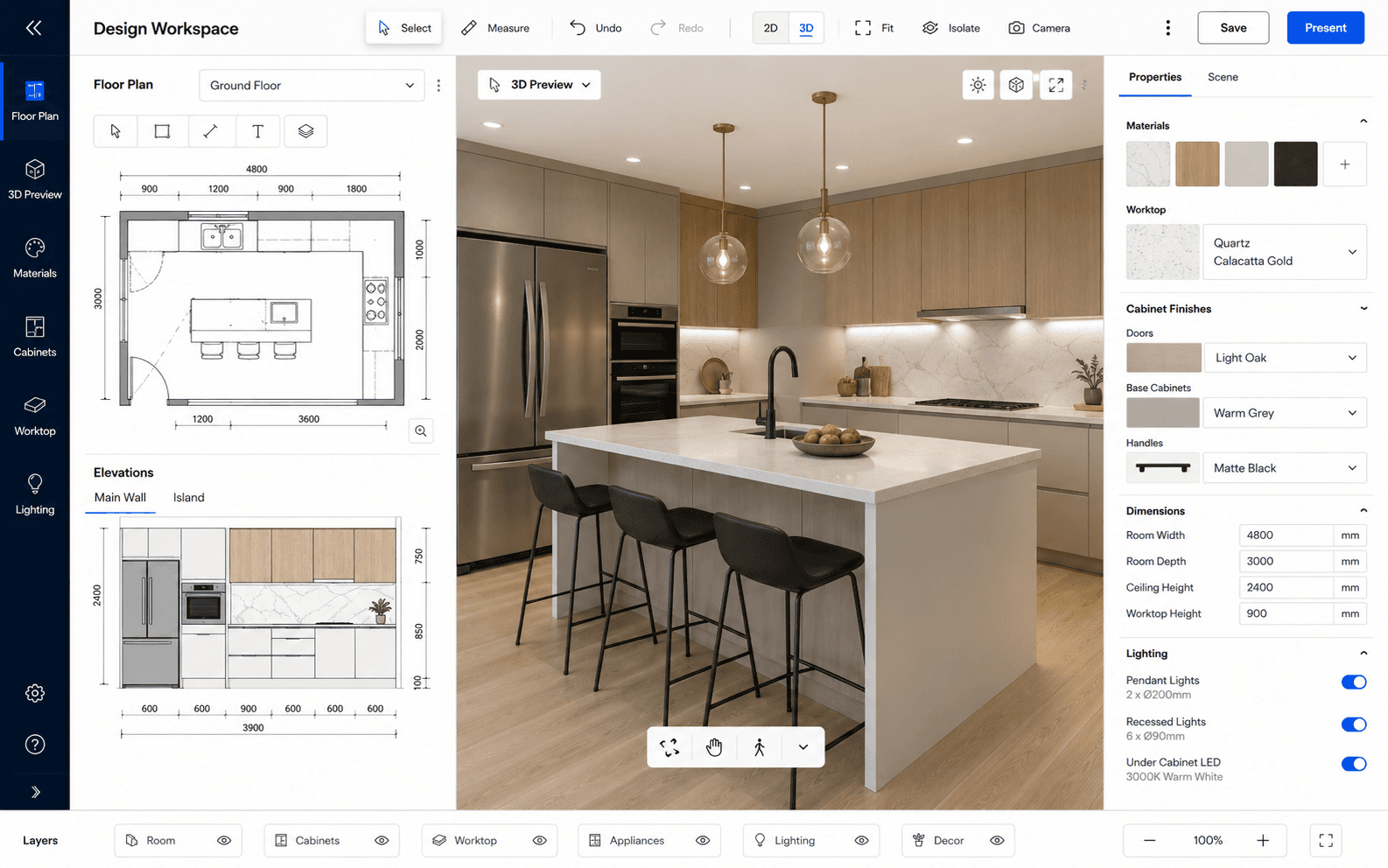
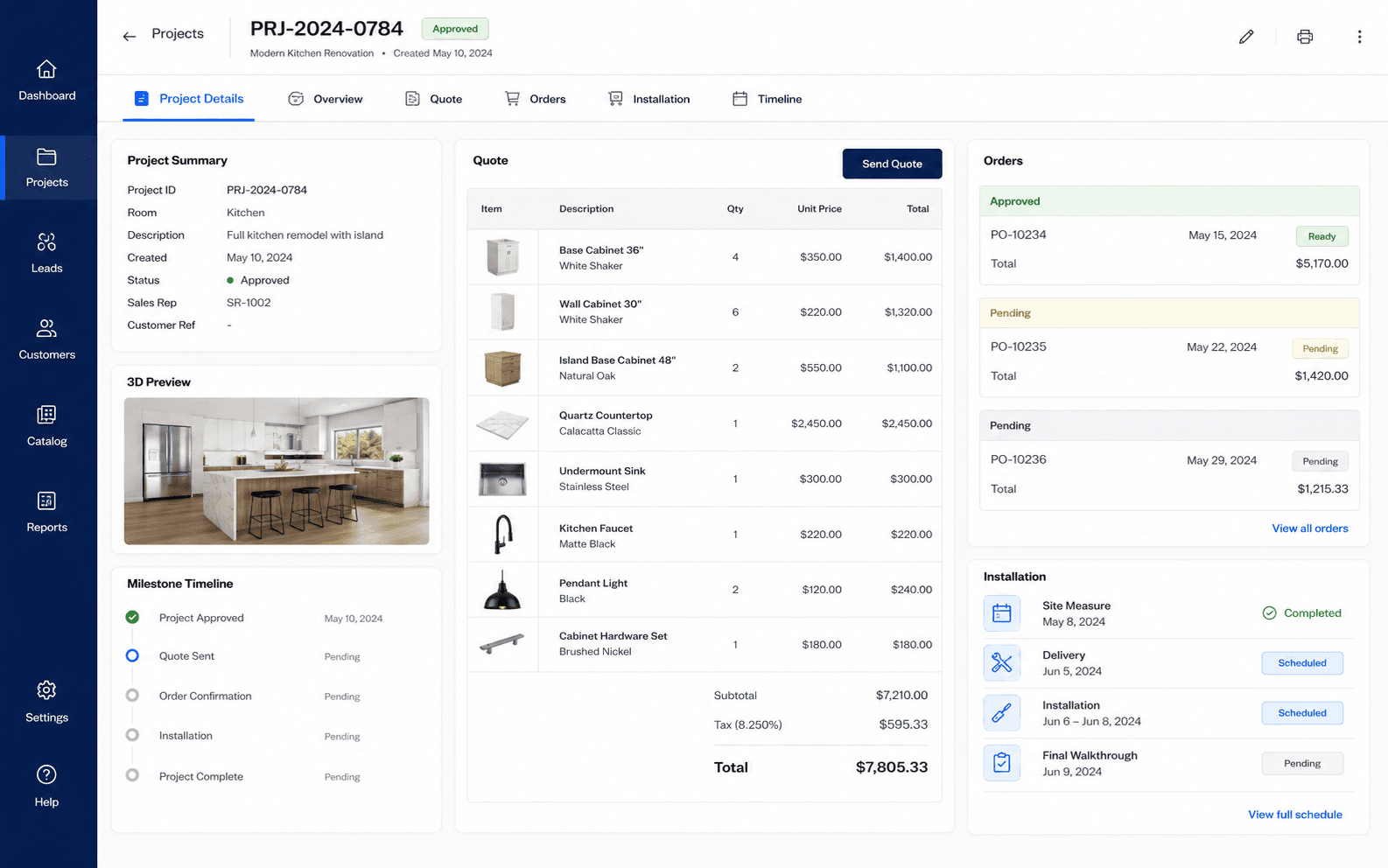
Projects Dashboard · 1 / 3
Product UI shown for context. Details have been generalized to respect confidentiality.
Key Engineering Contributions
- →Built and improved SaaS product features supporting planning, configuration, quoting, ordering, and workflow automation end to end
- →Designed backend services, APIs, and integration flows that connected product data, customer workflows, and internal platform services
- →Improved user-facing application experiences with clearer workflows, stronger performance characteristics, and maintainable front-to-back implementations
- →Refactored legacy platform areas to reduce technical debt and make subsequent product changes safer and faster to deliver
- →Strengthened reliability through better validation, logging, testing, debugging, and production support on critical paths
- →Collaborated with product, design, QA, DevOps, and engineering to ship stable releases and unblock cross-team delivery
- →Supported technical direction through code reviews, architecture discussions, mentoring, and practical engineering guidance
Reliability, Security & Maintainability
Reliability
Critical workflow and order paths were treated as systems, not screens: validation at boundaries, clearer error handling, logging for diagnosis, and production support habits that shortened time-to-understanding when integrations or automation misbehaved. The goal was graceful failure and recoverable state—not silent data drift.
Security
Multi-tenant SaaS work required consistent isolation of customer and operational data, careful handling of integration credentials and service boundaries, and authorization patterns that did not erode as new APIs and partner connections were added.
Maintainability
Legacy refactoring and clearer service and integration boundaries reduced coupling to third-party APIs and made future product changes less expensive. Code review and shared guidance helped the team keep quality bars consistent as the platform evolved.
Outcome
Delivered scalable application features and integration capabilities that strengthened Cyncly’s design-to-commerce product suite—improving workflow clarity for users and maintainability for engineering. Specific proprietary implementation details have been generalized to respect confidentiality.
Lessons
- ◆In design-to-commerce domains, staff-level impact comes from understanding the real workflow before optimizing any single service
- ◆Integration reliability is mostly failure-path design: retries, validation, and observability matter as much as the happy path
- ◆Paying down legacy debt surgically—while shipping—preserves velocity better than either freezing the product or rewriting everything
- ◆Cross-team collaboration is part of the architecture: features that ignore QA, DevOps, and support realities do not stay reliable in production